
Building My Own Bus
On the quiet, modern way we walk into the wilderness.

I’ve been thinking about the godless inverses of sublime experience.
Drunkenness instead of freedom from insecurity. Psychedelics instead of awe. Pornography instead of intimacy, adventure, ecstasy.
The list keeps writing itself once you start.
The premise is this: we are spiritual beings with a need for the deep, sublime nature of life with God.
Take God out of the sublime, and you don’t get neutrality. You get the unnatural, ugly, unavailable version of it. You get dysfunction that looks like transcendence.
Chesterton said it best: “Take away the supernatural, and what remains is unnatural.”
We all ache for the same things. The tragedy is watching ourselves try to find them anywhere but the Father. The millions of little corners of the internet. The Reddit threads. The endless value-signaling in pursuit of an audience. The billions spent on travel and entertainment and experience and social acceptance, not because any of those things are bad, but because we are trying to make them carry a weight they weren't built to carry.
"Creatures are not born with desires unless satisfaction for those desires exists." — C.S. Lewis
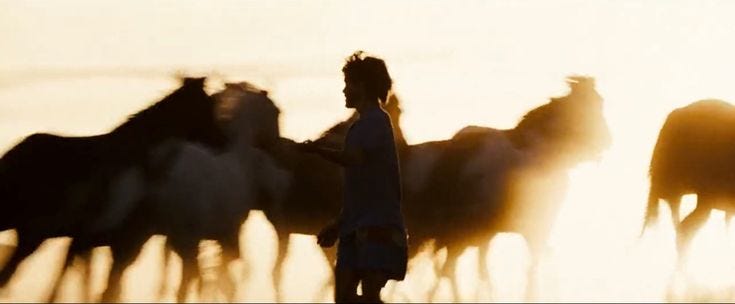
Christopher McCandless was 24 when he walked into the Alaskan bush with ten pounds of rice, a .22 rifle, and no map. He left behind a $24,000 college fund (donated to OXFAM), a Datsun (abandoned in a flash flood), and a family (whom he hadn’t told where he was going). He had even renamed himself Alexander Supertramp. He was, by every account, looking for something real.
Read his journals and you find a man chasing the sublime with religious intensity. He wanted freedom. He wanted truth. He wanted to strip his life down until he found the thing underneath. He quoted Tolstoy. He underlined Thoreau. He wrote, in the kind of language usually reserved for monks: “The core of man’s spirit comes from new experiences.”
This is not the diary of a nihilist. This is the diary of a man on fire for substance.
McCandless wasn’t running from meaning. He was sprinting toward it. He just refused to look up.
He wanted transcendence without submission. Communion with nature without a Creator. He wanted the sublime stripped of the supernatural, and he got exactly what Chesterton warned about. He got what was unnatural. He got 113 days alone in a converted school bus, slowly starving, surrounded by beauty that could not save him.
And here’s the part that stays with me every time.
In his final weeks, weak and dying, McCandless was reading Tolstoy’s Family Happiness. He underlined this line: “I have lived through much, and now I think I have found what is needed for happiness. A quiet secluded life in the country, with the possibility of being useful to people...”
And then, in the margin of Doctor Zhivago, in some of the last words he ever wrote, he scrawled four words that read like a confession:
“Happiness is only real when shared.”
He went looking for the sublime alone. He found it. And it killed him.
This is the whole thesis in one man.
McCandless wasn’t wrong about the longing, he was right about it. He felt the ache C.S. Lewis described, the desire nothing in this world can satisfy, and he took it seriously enough to leave everything behind. That’s more than most of us do. He just tried to satisfy a God-sized desire with a God-shaped wilderness, and the wilderness void of God consumed him.
He reached for the right thing the wrong way.
I think about McCandless and I want to feel superior. I want to shake my head at the kid who walked into Alaska with ten pounds of rice.
But I can’t. Because I do the same thing every day. I just do it with better insulation.
I reach for the phone instead of pressing into the silence. I refresh the data analytics on my projects instead of asking if the work is good. I plan the trip instead of sitting with the restlessness that the trip is supposed to cure.
I am building my own bus, board by board, and calling it a life.
Back to the list:
Drunkenness instead of freedom from insecurity. Psychedelics instead of Awe. Pornography instead of intimacy, adventure, ecstasy.
Every line on that list is a bus in the bush. Every one of them is someone reaching for the sublime and refusing to look up. Every one of them is a God-sized desire crammed into a God-shaped substitute, and every one of them ends the same way McCandless ended. Alone, starving, surrounded by a rush that cannot save us.
The ache is not the problem. The ache is the proof.
It is evidence that we were built for something the world alone cannot hand us.
So the question isn’t whether you’ll worship. Or pursue meaning with religious ferocity. You will. The question is, what will give you the meaning you desire?
The bottle or the freedom it imitates. The audience or the love it counterfeits. The wilderness or the God who made it. The mud pie or the sea.
McCandless got one thing exactly right, scrawled in the margin of a dying man’s book:
“Happiness is only real when shared.”
He died one sentence short of the truth.
The fullness he was hunting wasn’t waiting for him in the bus or in the people he left behind. It was waiting in a life with God, lived shoulder to shoulder with people who know Him.
The ache was never for solitude or for company. The ache was for both, rightly ordered.
God at the center, His people around the fire, the sublime finally doing what it was made to do: lead us home.