
Burn After Reading and the "Nothing" We Learn
A meditation on nihilism, broken desires, and the only story that means something

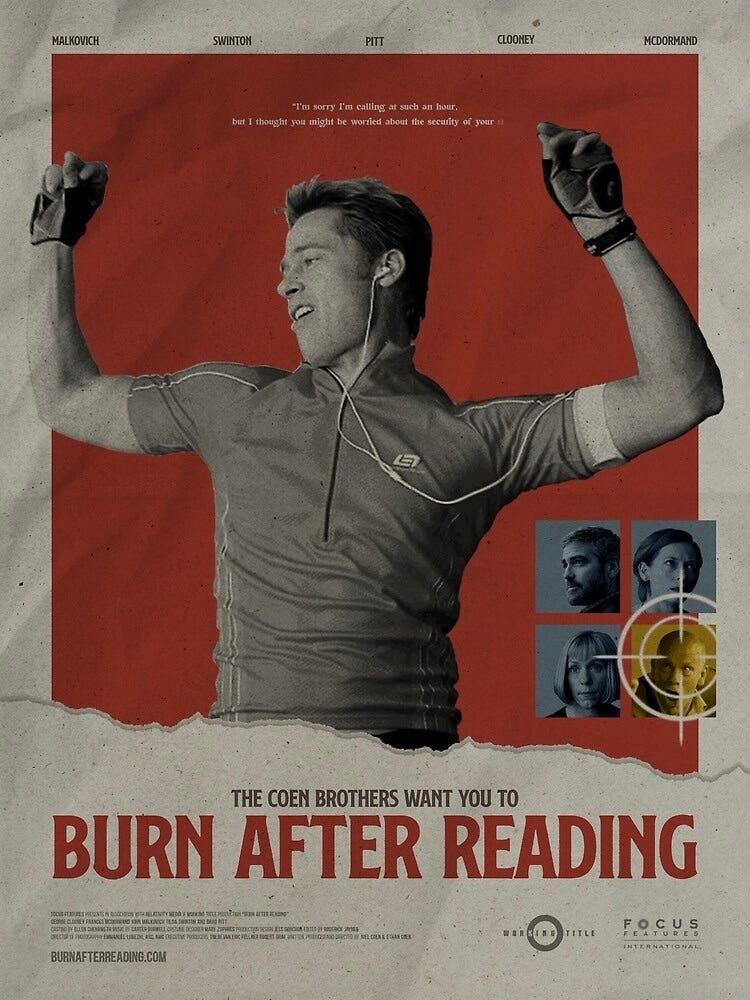
A Comedy About Nothing... That Says Everything
“So what did we learn, Palmer?”
“I don’t know, sir.”
“I don’t know either.”*
— Burn After Reading (2008)
The Coen Brothers' Burn After Reading is a brutal farce.
It’s a story where everyone is lost, spinning in their orbit of confusion, paranoia, and desire.
What starts as a CIA analyst’s petty memoir draft somehow entangles gym employees, serial adulterers, amateur spies, and federal agents in a series of increasingly absurd and ultimately tragic events.
Nobody wins. Nobody grows. People die, betray, run, or vanish. And at the end of it all, J.K. Simmons' character utters a gut-wrenching punchline:
"So what did we learn?... Absolutely nothing."
That is, I believe, the point.
A Web of Conflict (And It’s Almost Funny)
Burn After Reading is not just chaotic, it’s deliberately meaningless in its structure. Everyone’s decisions are driven by desires that either:
Lead to personal collapse, or
Expose just how paper-thin our idols are.
Let’s trace the absurd web of conflict:
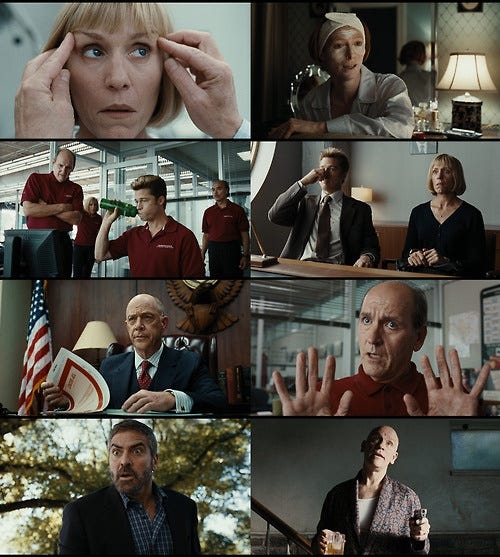
Chad (Brad Pitt) wants a quick payday from what he thinks are "classified documents." He ends up shot in the face by a paranoid George Clooney.
Linda (Frances McDormand) wants to fund her cosmetic surgeries to feel worthy of love. She manipulates everyone, loses her best friend, and ends up alone.
Harry (George Clooney) is addicted to affairs and compulsive paranoia. He murders Chad, flees the country, and still learns nothing.
Osborne (John Malkovich, who’s absolutely incredible) is the alcoholic, disgruntled CIA analyst whose manuscript sets everything in motion but he has no idea.
The CIA has no clue what’s happening either. They just clean up the mess and ask each other if they learned anything. They didn’t.
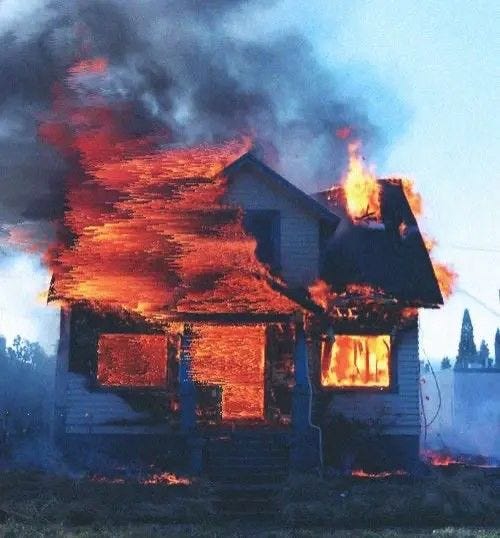
Every character clings to something. A relationship, a self-image, a dream of power, control, or escape, and in turn, these exaggerated idols burn their lives to the ground.
The Idol of Desire
This movie is not random. It’s a dark satire of the human condition.
When people make gods out of their desires, they become slaves to them, and worse, those desires never deliver what they promise.
When people try to save themselves through cosmetic surgery, control, lust, ego, money, or information, they lose themselves and wind up in further disarray.
Even the systems meant to make sense of the chaos (the CIA) don’t understand it.
The Coens are, in effect, holding up a mirror to a world that just ... doesn’t work.

A world without God. A world without love. A world that ends with a shrug.
This Isn’t Just Fiction. It’s a Warning.
The reason Burn After Reading hits so hard is that it’s not exaggerating. It’s showing us what life looks like when:
Sin rules instead of grace
The self directs every move
Meaning becomes unanchored in reality
The Bible speaks directly to this condition:
"They exchanged the truth about God for a lie and worshiped and served created things rather than the Creator..."
- Romans 1:25“Those who make idols become like them; so do all who trust in them.”
- Psalm 115:8
"The mind governed by the flesh is death, but the mind governed by the Spirit is life and peace."
- Romans 8:6
But There Is a Better Story
Burn After Reading gives us a world where the powerful shrug, the weak perish, and everyone walks away unchanged.
This is not just fiction. This is real life for most people.
It’s the default human condition without God and without love.
But there is a better story. A story of redemption that has been unfolding since before time began and continues until its end.
It might sound like a fairytale until you find out that this fairytale was embodied by a real man.
The Story That Doesn’t Burn
He was blameless, gentle, and humble.
The world has fashioned its calendar around His life.
His name is Jesus Christ—born between 6 and 4 BC, crucified, resurrected, and ascended between AD 30 and 33.
He gave what we never could to cover the cost we incurred by trusting in ourselves.
He is God in the flesh. The Son of God.
He was given to us so that we might have life and have it to the full.
No more striving.
No more questioning our value.
No more running on the wheel of broken desires.
In Him, we are fulfilled.
And He is our fulfillment.
Life. Death. Resurrection.
This is the truer and greater story for those who put their trust in Him.
Even a Movie About Nothing Tells Us Something
Burn After Reading is a movie about nothing.
But even a movie about nothing tells us something.
It tells us something about ourselves.
About our idols.
About our desperate need for meaning.
And in a world that shrugs, Jesus speaks.
In Him, everything matters.
Even something as small as a movie
Phenomenal read, love Pitt on the cover.